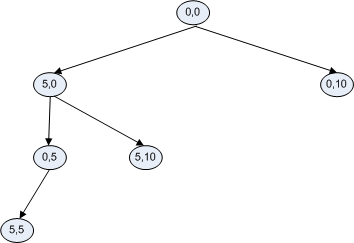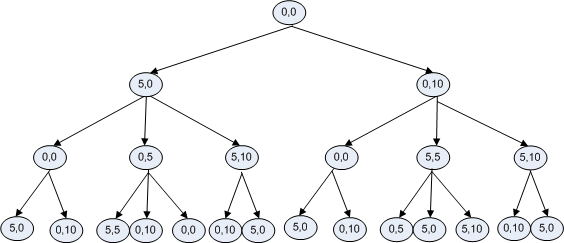
This is the basic algorithm, but we have to watch out for edge cases. One important edge case is problems that don't have a solution, like the aforementioned problem of measuring one litre given a five-litre and a ten-litre pitcher. Consider the search tree that results:
After three rounds of actions we have seen all the possible states. All the new states we generate are ones we have seen before, and we know they are not solutions, so the process will not terminate and we will have an infinite loop. The solution? Remember the states we have tried, and don't add tried states to statelist. If we do that then statelist will be emptied and that will terminate the program.
goal = 4
statelist = [(0,0)]
tried_states = []
while len(statelist) > 0 and 4 not in statelist[0]: # BUG!
	  # BUG above: misses multi-pitcher solutions!
	  state = statelist.pop(0) # remove first state from statelist
   add state to tried_states
   for every pitcher in state
       If the pitcher isn't empty:
           empty the pitcher --> new state
           if new state not in tried_states:
               add new state to statelist
        If the other pitcher isn't full:
           Pour from the pitcher into the other pitcher
           if new state not in tried_states:
               add new state to statelist
       If the pitcher isn't full:
           fill the pitcher --> new state
           if new state not in tried_states:
               add new state to statelist
# We end up here if it is solved, but also if it is unsolvable
# so we need to check which it is:
if 4 in statelist[0]:
    Solved!
else:
    Unsolvable :-(
By remembering states we have tried, we not only terminate instead of looping forever, we search fewer options: Correct and Efficient!