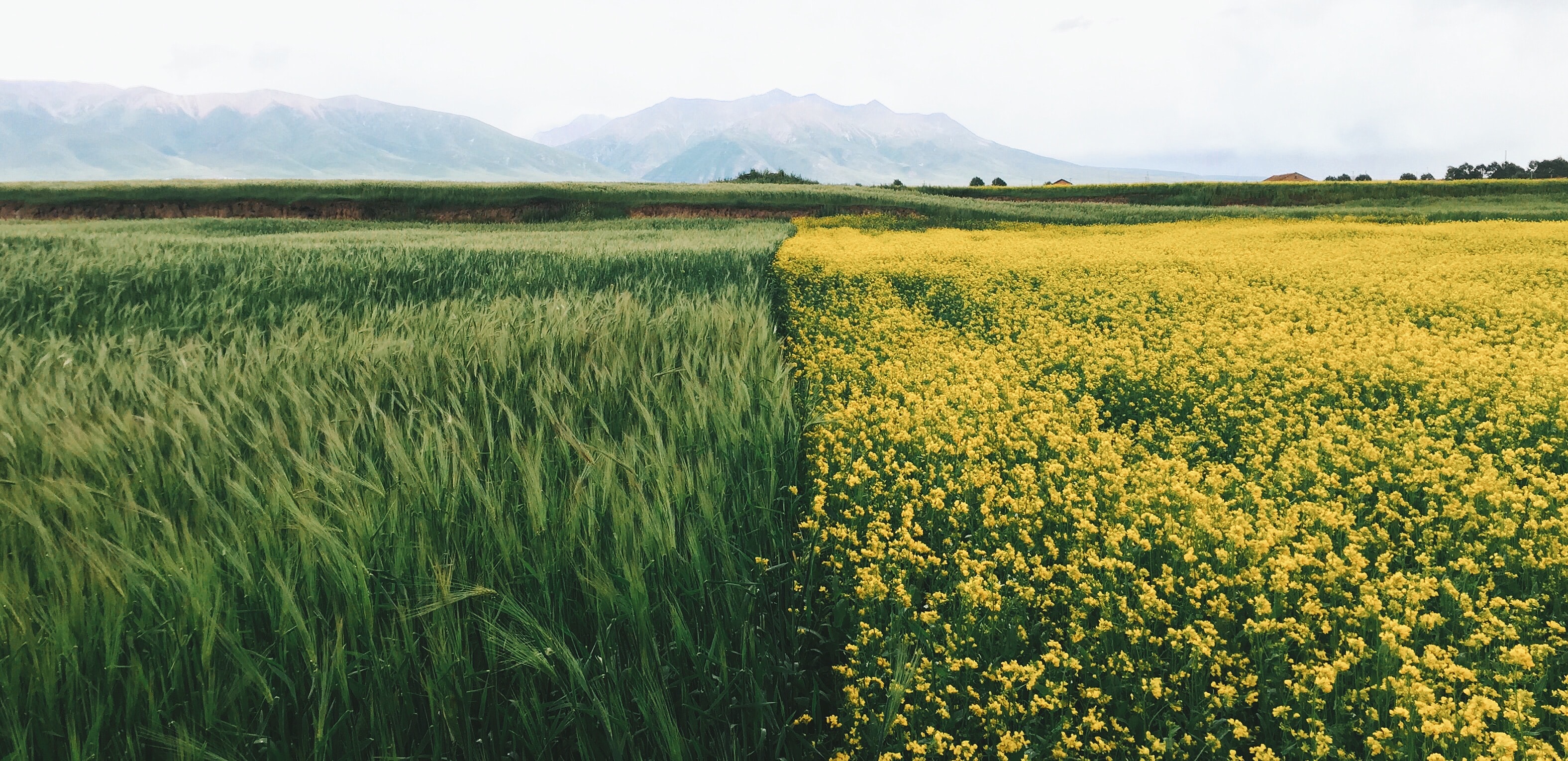
The yellow flowering plant on the right above is canola. We can't grow it around Whitehorse. Or can we? How do farmers decide? If we can't grow it now, might climate change enable us to soon? It all depends on the accumulation of heat by the plant. And accumulations are measured by integrals, our final calculus topic.
Integrals measure areas and are calculated using antiderivatives
The heading says it all. That's it. That's the week. 😅
If we have a function that represents a physical quantity (weight, rainfall, electric current) then the area beneath that function measures the total accumulation of the quantity over time. We call that amount the integral.
It turns out the integral is the
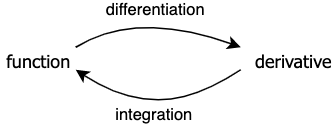
difference between the values of the function's antiderivative at the endpoints. So the new skill this week is antidifferentiation. That is such a mouthful that we usually say integration instead.
Beware! The main point of confusion in this week's material is that where we have spent the last two weeks taking derivatives we now want to untake them, that is to go backwards from a derivative to the function it came from. Not getting the two directions confused is often this week's main challenge.
Peeking ahead
This week will complete our tour of calculus topics. Next week we'll move on to something completely different: probability. It's an area of discrete (as opposed to continuous) mathematics. And because it is so different it gives you a fresh start for the home stretch of the course.
Office Hours
I'll be in my
Zoom
"office" again this week on Monday, Wednesday and Friday
from
10:30 am to 11:30 am. Come on by if you have questions. 🤷🏻♀️
We had the first pile-up of students in office hours last Friday, but I think it worked out pretty well for them to "lurk" and hear each other's questions. That's certainly how in-person office hours often work out!
That's all for now!
Enjoy the increasing light and stay in touch,
Tim
There were no guesses about last week's striking photograph, so it's back to lame comics. 🤓